August 19, 2026 · The Key Bot
Heat Illness Prevention for Traffic Control Crews: Where the Rules Stand
Flaggers stand on asphalt in full-sleeve hi-viz with no shade. There is no final federal heat standard yet, but there is a proposed one, a General Duty Clause, and a growing set of state rules — here is what applies now.
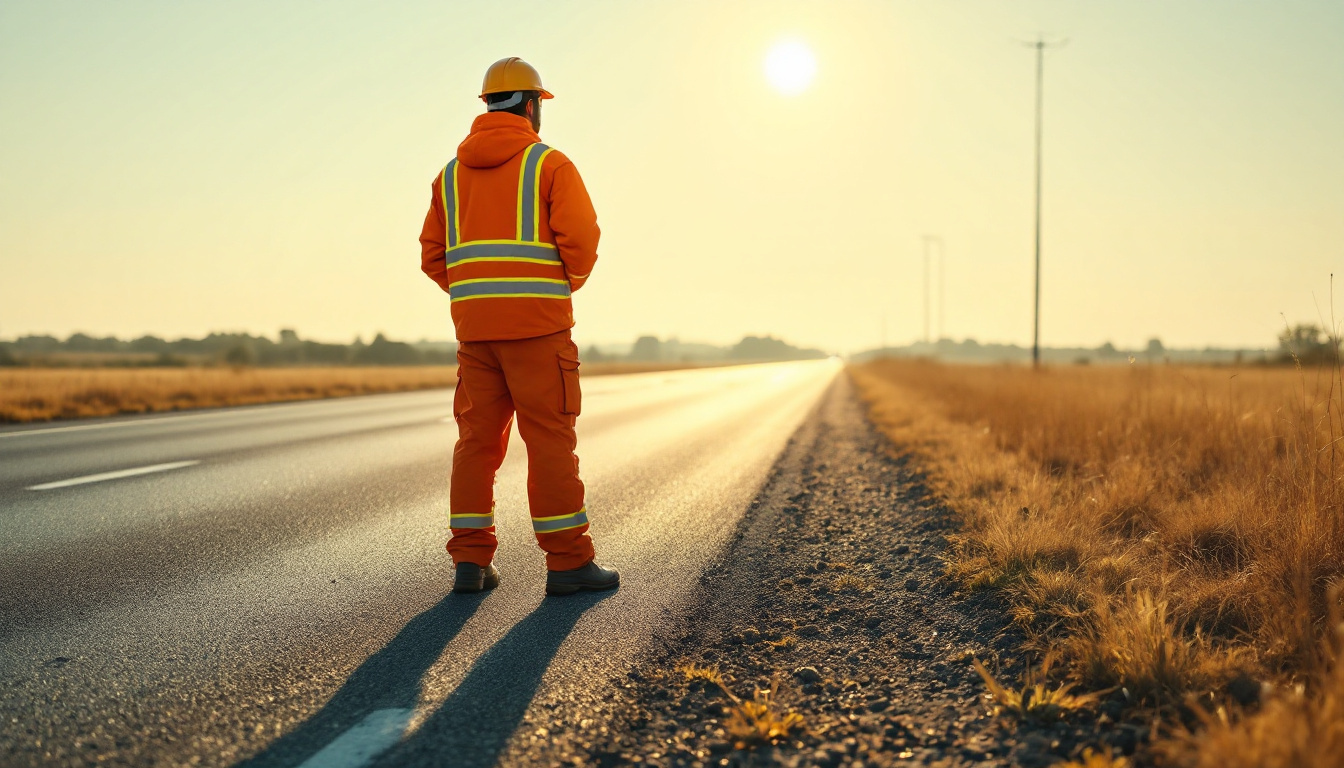
A flagger works standing still, on asphalt that radiates heat back at them, in required long-sleeve high-visibility apparel, frequently with no shade within a hundred yards, and often unable to leave the station without stopping the operation. It is close to a worst case for heat exposure, and the crew member in that position is usually the newest and lowest-paid person on the job.
This post covers what currently applies, what is proposed, and the operational changes that matter most — which are mostly scheduling decisions rather than equipment purchases.
This is general orientation, not legal advice, and requirements vary by state. Whether you are in a federal OSHA jurisdiction or a state-plan state changes what applies to you directly. Verify with the authority having jurisdiction over your operations.
The regulatory position, accurately stated
There is no final federal heat standard. OSHA published a Notice of Proposed Rulemaking for Heat Injury and Illness Prevention in Outdoor and Indoor Work Settings on August 30, 2024. According to OSHA's rulemaking page, the initial comment period closed on January 14, 2025, a public hearing ran from June 16 to July 2, 2025, and the post-hearing comment period ended October 30, 2025. The rulemaking remains in progress.
Anyone telling you a federal heat rule is in force is wrong. Anyone telling you nothing applies is also wrong.
What applies now is the General Duty Clause of the OSH Act, which OSHA has used for years to cite heat hazards where a recognized hazard existed and a feasible means of abatement was available. OSHA collects its material on heat at its heat exposure topic page. Several states operating their own OSHA-approved plans have adopted specific outdoor heat rules with their own triggers and requirements. If you operate in more than one state, that variation is something to establish rather than assume.
What is proposed is worth knowing because it is the direction of travel and because it describes a defensible program regardless of whether it becomes law. The proposal is structured around two thresholds: an initial heat trigger at a heat index of 80 degrees Fahrenheit, and a high heat trigger at 90 degrees. At or above the initial trigger, the proposal contemplates suitably cool drinking water in adequate quantity, break areas with shade outdoors or cooling indoors, an acclimatization protocol for new and returning employees, and regular two-way communication between employer and employees. The high heat trigger contemplates additional measures. Because it is a proposal, specifics can change.
The practical read: a company that builds its program around the proposed structure is both reducing a real hazard now and positioning itself for whatever final rule emerges.
Why traffic control is a hard case
Most heat guidance assumes a worker who can seek shade, adjust pace, and take a break when they need one. Flagging violates all three assumptions.
The station cannot be abandoned. A flagger controlling one-lane, two-way traffic is a component of the traffic control setup. Walking away stops the operation, which means the person most in need of relief is the person whose relief costs the most.
There is no shade, by design. The flagger station is placed for sightlines and safety — see flagger stations and procedures for the placement logic. Those criteria and "somewhere shaded" rarely coincide.
Required apparel adds load. High-visibility apparel is not optional; OSHA's construction standard at 29 CFR 1926.201(a) requires flagging and flagger warning garments to conform to Part 6 of the MUTCD, and higher-speed and nighttime work drives higher garment classes. Our post on high-visibility apparel classes covers the class selection; the heat consequence is a real tradeoff, not a reason to under-specify.
Standing on asphalt is worse than standing on grass. Pavement surface temperature substantially exceeds air temperature in direct sun, and the heat index a weather app reports is not what the flagger is experiencing.
Seasonal staffing undermines acclimatization. Acclimatization matters most for people new to working in heat or returning after time away — which describes a large share of a traffic control workforce every spring. Our post on hiring and retaining flaggers covers the turnover picture that makes this a recurring problem rather than a one-time one.
What actually reduces the risk
Ranked roughly by effect per dollar.
Build relief into the schedule, not into individual judgment. This is the single highest-value change. A rotation that happens on the clock — someone comes to the station, the flagger steps away — removes the decision from the person least able to make it well. A flagger who has to ask will wait too long, every time, because asking stops the job.
Put water at the station, not at the truck. Distance is a deterrent. If hydration requires walking to a vehicle two hundred feet away, it will not happen at the frequency it should.
Create shade where none exists. A pop-up canopy at a relief point costs very little relative to a single heat incident. It also makes the relief rotation feel like a real break rather than standing in a different place.
Acclimatize deliberately in spring and after absences. New and returning workers ramped up over their first days is a protocol, not an instinct, and it needs to be written down or it will not survive a busy week.
Schedule the work differently when you can. Early starts and night work are already on the table for many operations for traffic reasons; heat is another input to the same decision. See night work traffic control for what changes when you move a job into darkness, since it is not a free swap.
Train supervisors on recognition, and make escalation cheap. The distinction between heat exhaustion and heat stroke is time-critical, and the failure mode is a supervisor who does not want to be the person who called an ambulance unnecessarily. Say out loud that calling early is the correct decision and will never be second-guessed.
Cover it in the tailgate meeting when conditions warrant. Not as a recital — as a specific plan for that day, that site, and that rotation. Our note on tailgate safety meetings covers making those useful rather than ritual.
Documentation, briefly
If a heat incident occurs, the questions afterward will be about what the employer knew and what it did. The records worth having are unglamorous:
- Conditions on the day, recorded at the site rather than inferred from a regional forecast
- The rotation actually worked — who was at which station, and for how long
- Water and shade provision
- The acclimatization status of anyone new or returning
- Tailgate topics covered that morning
- Training records for supervisors on recognition and response
Most of that is already captured if your crews record time by station and job. Time attribution built for job costing turns out to also answer "how long was that person at that station," which is one of the few places where a cost control and a safety record are the same data. Our post on job costing covers the primary use; this is the secondary one.
The honest summary
There is no federal heat standard in force today, a proposed one exists with 80- and 90-degree heat index triggers, the General Duty Clause applies now, and some states impose their own rules directly. For a traffic control company none of that changes what actually reduces risk, which is scheduled relief, accessible water, shade at the relief point, deliberate acclimatization, and supervisors who are told plainly that calling for help early is the right answer.
If you want the scheduling side of that to be visible — who is at which station, for how long, on a day the heat index hit 96 — that is a dispatch and time-tracking question, and a demo will show what the record looks like.
Frequently asked questions
Is there a federal OSHA heat standard?+
Not a final one. OSHA published a Notice of Proposed Rulemaking for Heat Injury and Illness Prevention in Outdoor and Indoor Work Settings on August 30, 2024. The initial comment period closed in January 2025, a public hearing concluded in July 2025, and post-hearing comments closed in October 2025. The rulemaking remains in progress and no final rule has issued.
So nothing applies right now?+
That is the wrong conclusion. In the absence of a specific standard OSHA has long used the General Duty Clause, which requires employers to furnish employment free from recognized hazards causing or likely to cause death or serious physical harm. Several states also operate their own heat rules that apply directly to outdoor work. Check whether you are in a state-plan state.
What are the proposed heat triggers?+
The proposal is built around two thresholds — an initial heat trigger at a heat index of 80 degrees Fahrenheit, and a high heat trigger at 90 degrees. At or above the initial trigger the proposal contemplates cool drinking water, break areas with shade or cooling, acclimatization for new and returning workers, and two-way communication. Because this is a proposal, the details can change before any final rule.
Why are flaggers particularly exposed?+
The combination is unusually bad — standing still on radiating asphalt with no shade, in required long-sleeve high-visibility apparel, often unable to leave the station without stopping the operation. Acclimatization is also a live issue because staffing turns over seasonally, and new or returning workers are disproportionately represented in serious heat cases.
What is the single highest-value thing to change?+
Build relief into the schedule rather than into individual judgment. A flagger who has to ask to be relieved will wait too long, because the operation stops when they leave the station. A rotation that happens on the clock removes the decision from the person least able to make it well.