August 19, 2026 · The Key Bot
Smart Work Zones and Queue Warning Systems: What They Do and When They Pay
Rear-end crashes at the back of a queue are one of the most common fatal work zone crash types. Queue warning systems exist to address exactly that — here is how they work, what the evaluation data actually shows, and when they belong in a bid.
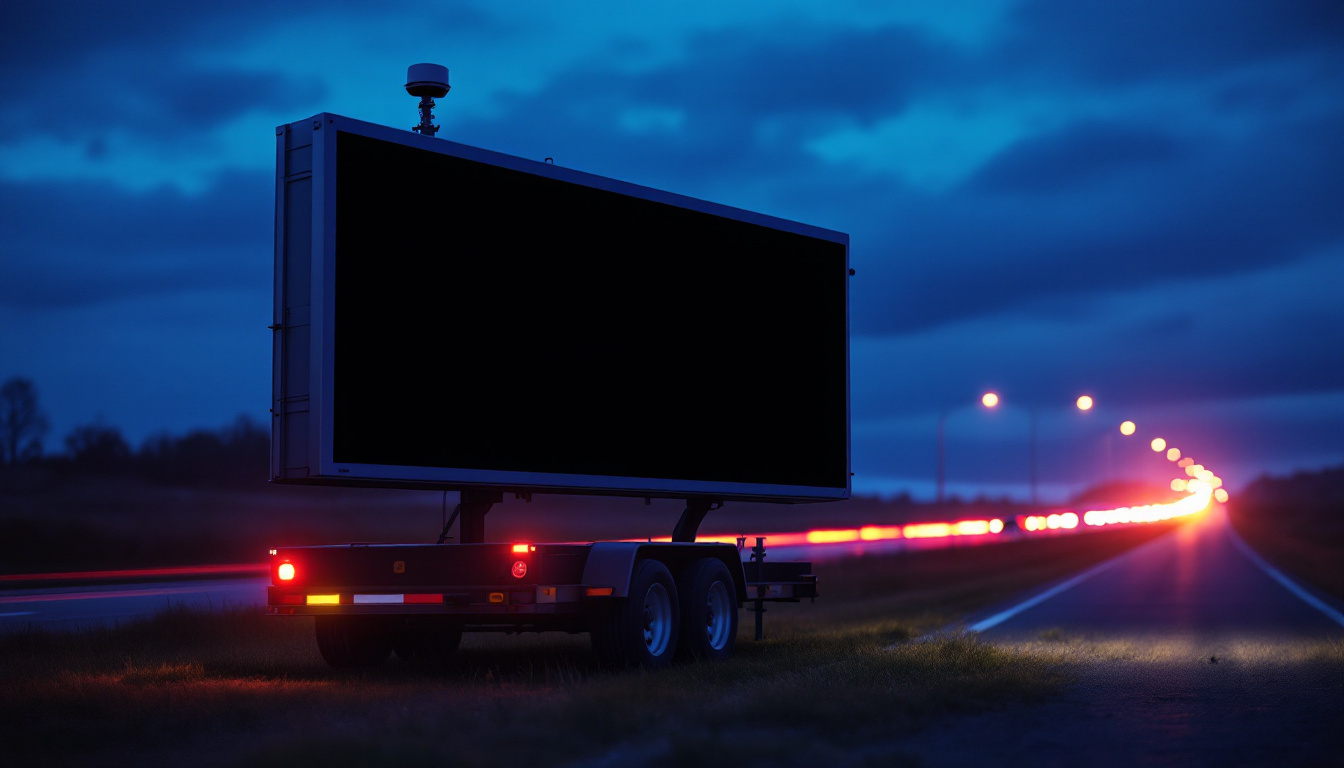
The most predictable killer in a work zone is not the work zone. It is the back of the queue the work zone created, several hundred yards upstream, where a driver at highway speed comes around a curve into stopped traffic.
Smart work zone systems — specifically queue warning — exist to address that geometry directly. This post covers what they do, what the published evaluation evidence actually says, and when they belong in a bid.
The problem they address
The MUTCD is explicit that queueing is a design consideration, not an incidental outcome. Its fundamental principles for temporary traffic control note that where a lane closure reduces available capacity, the resulting stopped or slow-moving queue might extend past the normal location of advance warning signs — and that an assessment of expected queue length should be part of the plan design process, potentially adjusting sign spacing, sign count, and device conspicuity. FHWA publishes the MUTCD 11th Edition with Part 6 available in full at no cost.
The crash data bears out why. FHWA's compilation reports rear-end collisions in 174 of 821 fatal work zone crashes in 2022 and 206 of 880 in 2021, with speeding a factor in 281 of the 2022 fatal crashes. Overall, FHWA reports 891 work zone fatalities in 2022 and 963 in 2021, and the Work Zone Safety Information Clearinghouse records 850 work zone fatalities in 763 fatal crashes in 2024.
A static sign cannot tell a driver that the queue starts in 800 feet today and did not yesterday. That is the gap.
How the systems work
The architecture is consistent across vendors even where the products differ.
Sensing. Radar or other detectors placed along the approach measure speed and occupancy, establishing where traffic has slowed.
Logic. A control layer decides when conditions meet a threshold worth warning about, and which sign should say what.
Display. Portable changeable message signs, positioned upstream far enough that a driver reading the message still has room to respond. See arrow boards and message signs explained for the device side.
Data. Most systems log speeds, queue lengths and activations, which is increasingly used for agency reporting.
Related applications in the same family include travel-time display, dynamic merge or late-merge control, speed feedback, and automated incident detection. FHWA's work zone ITS resources describe the application set as covering traffic monitoring and management, traveler information, incident management, road user and worker safety, capacity, enforcement, performance-based contracting tracking, and work zone planning, and it maintains an implementation guide for agencies deploying them.
What the evidence actually says
Here is where it is worth being careful, because vendor material in this category tends to quote favourable numbers without the caveats attached to them.
FHWA's case study material on work zone ITS reports results from an I-70/I-57 interchange project in Effingham, Illinois. Comparing 2010, before system implementation, with 2011, after, it reports nearly a 14 percent decrease in queuing crashes and an 11 percent reduction in injury crashes, despite a 52 percent increase in the number of days when temporary lane closures were implemented on the project.
FHWA attaches its own caveat to that finding, noting that it is not certain whether queuing frequencies and conditions between the two years were similar, while describing the trends as encouraging. That is the appropriate level of confidence: a before-and-after comparison on a single project, with an acknowledged confounder, pointing in a favourable direction.
Broader evaluation work in this area has produced a range of results, and some reported effects have been questioned on the grounds that they cover a specific crash type over a specific period. The honest summary for a contractor is: the mechanism is sound, agencies increasingly specify it, and the published effect sizes are encouraging but not settled. Anyone quoting you a precise percentage as a general fact about queue warning systems is overstating what the literature supports.
Where the requirement comes from
If ITS appears in a solicitation, it usually traces to the transportation operations component of a Transportation Management Plan.
Under the federal Work Zone Safety and Mobility Rule, significant projects require a TMP with a transportation operations component addressing strategies including work zone traffic management — see the Work Zone Safety and Mobility Rule explained for what triggers that. Agencies are also directed to use operational data including queue lengths and travel times in assessing work zone impacts, which is precisely the data these systems generate.
The practical read: a job that specifies ITS is a job where the agency has already concluded the corridor has impacts worth managing. That tells you something useful about how closely the work will be watched.
When it belongs in a bid
Conditions that make a queue warning system worth proposing, even unprompted:
Capacity is genuinely constrained. A closure reducing a corridor below its demand will queue, predictably and daily.
Approach geometry hides the queue. Curves, crests, and structures that limit sight distance are the highest-value case, because the static advance warning cannot compensate.
Speeds are high. The differential between approach speed and stopped traffic is the hazard.
Queue length varies. If it is the same every day, static signing can be placed for it. If it swings with the peak, it cannot.
The closure runs long enough to amortise setup. These systems have real mobilisation cost.
Conditions where it is hard to justify: short-duration and mobile operations, where the setup outlasts the work — see short-duration and mobile work zones — and low-volume corridors that do not queue at all. Note too that for operations that move continuously rather than sitting still, the applicable toolkit is different; see moving operations and rolling lane closures.
Rent, do not buy
For a traffic control contractor this is one of the clearer equipment calls.
Work zone ITS is deployed per project rather than continuously. It carries setup, calibration and commissioning expertise that is not trivially transferable. The technology moves, so ownership carries obsolescence risk. And utilization for a typical contractor is low, because only a fraction of jobs specify it.
That combination is the textbook rental case. See renting versus buying traffic control equipment for how the same analysis applies across the fleet.
The one caveat: if a meaningful share of your work is on corridors that specify ITS, and you are subcontracting it out repeatedly at a markup somebody else is collecting, run the numbers again. That is a different business with different economics, and some traffic control companies have grown into it deliberately.
What to nail down before bidding one
- Who supplies, installs, calibrates and maintains the system
- Who is responsible when it fails at 2 a.m., and what the response obligation is
- What data the agency expects, in what format, and who submits it
- Whether the message content requires agency approval in advance — many agencies require exactly that for portable message signs
- What happens to the equipment during a project suspension
- How the system interacts with the rest of your setup, especially advance warning placement
The last one is easy to skip and worth thinking through. A queue warning sign placed upstream of your advance warning area becomes part of the driver's sequence of information, and it should reinforce rather than compete with the static signs. That is a plan question, which means it belongs in the plan — see submitting a traffic control plan for approval.
Frequently asked questions
What is a smart work zone?+
A work zone using intelligent transportation systems — sensors, portable message signs, and a control layer — to detect conditions and inform drivers in real time. FHWA describes applications including traffic monitoring and management, traveler information, incident management, road user and worker safety, enforcement, and performance tracking.
What does a queue warning system actually do?+
It detects slow or stopped traffic upstream of the work zone with sensors, then displays a warning on portable message signs far enough back that approaching drivers see it before they reach the queue. The purpose is to address the rear-end crash at the back of a stopped queue, which is a recurring fatal crash type in work zones.
Does the evaluation data show it works?+
FHWA's case study material reports encouraging results with explicit caveats. On one Illinois interchange project it reported nearly a 14 percent decrease in queuing crashes and an 11 percent reduction in injury crashes after implementation, despite a 52 percent increase in days with temporary lane closures — while noting uncertainty about whether queuing conditions between the two years were comparable.
Should we own or rent this equipment?+
Rent, in almost all cases. Work zone ITS is deployed per project, carries meaningful setup and calibration expertise, and the technology moves. It is the clearest rental case in the equipment category for a traffic control contractor.
Where does a smart work zone requirement come from?+
Usually the transportation operations component of a Transportation Management Plan on a significant project, under the federal Work Zone Safety and Mobility Rule. If a solicitation includes ITS, that is generally why — and it means the agency has already assessed the corridor's impacts.