August 19, 2026 · The Key Bot
Renting vs Buying Traffic Control Equipment: How to Decide
Utilization decides most of it, but not all. Crashworthiness standards, storage and transport cost, and what happens to a device you own when the standard changes are the parts that turn a good spreadsheet into a bad decision.
The rent-versus-buy conversation in traffic control usually gets settled by instinct and cash position rather than arithmetic, and the instinct is not always wrong. But the arithmetic is not hard, and the parts people leave out of it are consistent enough to be worth naming.
The core calculation, and why most companies cannot do it
The break-even is straightforward in principle. For a device class, compare the annualised cost of owning — purchase price spread over useful life, plus maintenance, storage, transport, and the cost of the capital — against the rental cost for the number of days you actually deploy it.
The problem is the last term. Most companies do not know their deployment days per device class, because devices leave the yard on a job and come back without anything recording how long they were out. The spreadsheet then gets built on an estimate, and the estimate is usually optimistic in the direction the person building it already prefers.
So the first move is not a decision, it is a measurement: deployment days per device class over the last twelve months, including the days a device sat on a completed job before pickup. If you cannot produce that, produce it before making a six-figure purchase. Our posts on tracking traffic control devices by job site and equipment fleet replacement planning cover the record that makes this answerable.
Two refinements worth adding once you have the number:
Look at the distribution, not the average. A device class averaging 40 percent utilization might be at 95 percent for four months and near zero for the rest. That pattern argues for owning a baseline quantity and renting the peak — which is usually the correct answer and is rarely how fleets actually get sized.
Count the days you turned work down. Utilization computed on jobs you took understates demand if you declined work for lack of equipment. That is harder to measure and worth trying.
What usually gets bought
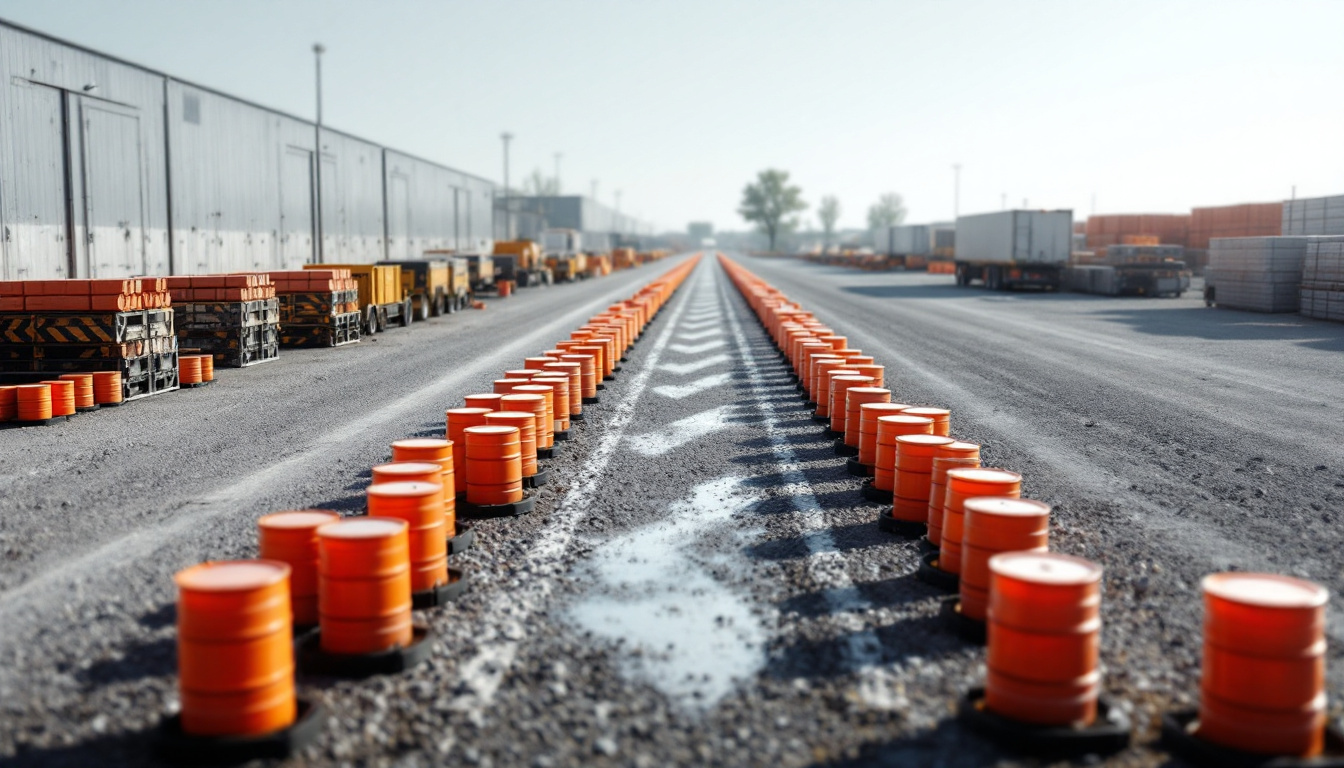
High-utilization commodity items with long service lives and simple logistics. Cones, Type I and Type II barricades, signs and stands, drums, delineators. These appear on nearly every job, cost little per unit, have no technology risk, and renting them repeatedly is obviously worse.
The nuance here is condition rather than quantity. Devices you own degrade, and agencies specify condition. MDOT SHA's utility permit provisions, for instance, require that temporary traffic control signs have at least 70 percent of the reflectivity over 90 percent of the reflectorized surface on initial installation, and that at least 90 percent of reflective barrier markers, warning lights and raised pavement markers be operational at any given time. Owning cheap devices does not mean owning them indefinitely — see sign retroreflectivity and device condition standards for how that replacement cycle should be driven by condition data rather than by complaints.
What usually gets rented
Expensive, low-utilization, or technology-dependent items.
Truck-mounted attenuators carry high capital cost, real maintenance obligations, and a crashworthiness standard. See truck-mounted attenuators explained.
Portable changeable message signs and arrow boards beyond a baseline count. Owning a couple makes sense; owning enough for your busiest week does not.
Portable traffic signals, which are expensive, need setup expertise, and appear on a minority of jobs.
Work zone ITS — queue warning and travel-time systems are usually deployed per-project and are the clearest rental case in the category, because the technology moves.
The costs people leave out
Storage. Yard space is a real cost and is almost never allocated to a device class. A company that buys its way to a peak-sized fleet will eventually buy or lease more yard, and that expansion never appears in the original justification. Our post on yard organization covers making the space you have work harder, which is sometimes the cheaper answer.
Transport. Devices you own have to be moved by your trucks. A rental delivered to site by the supplier consumes none of your fleet capacity on a busy morning.
Maintenance and inspection. Someone repairs, cleans, replaces sheeting, and checks lights. That labor is real and largely invisible because it happens in gaps.
Working capital. Money in devices is money not available for payroll during a slow month or for the bond capacity that lets you bid larger work — see insurance and bonding for traffic control contractors.
Administration. Owned devices need tracking. If you are not tracking them, that is not a saving — it is the loss described in charging for damaged and lost traffic control devices, taken silently.
The standards risk
This is the argument for renting that has nothing to do with utilization, and it deserves more weight than it usually gets on high-value crashworthy hardware.
Crashworthiness requirements for roadside safety hardware have transitioned over time, and what an agency will accept on a given project is set by that agency and by federal-aid policy. FHWA maintains its roadside hardware policy memoranda and guidance, including the AASHTO/FHWA joint implementation agreement governing the transition in evaluation criteria. Note that some agency documents still reference the older evaluation procedures — MDOT SHA's utility permit provisions, for example, reference NCHRP Report 350 performance criteria for traffic control devices — which is precisely why the acceptance question has to be asked of the specific agency rather than answered in general. Our post on MASH compliance for work zone devices covers the substance.
The commercial point: a large purchase of crashworthy hardware carries a risk that a rental does not, because the rental company absorbs obsolescence. Before committing capital to that category, confirm with the agencies you actually work for what they accept today and what their transition position is. That is a phone call, and it is cheaper than a stranded asset.
Depreciation and tax
Purchasing has tax consequences that can materially change the comparison, including expensing provisions for qualifying business equipment. Those limits and rules are set in the tax code, adjusted over time, and specific to your situation and entity — the IRS publishes guidance on Section 179 expensing and depreciation, and the current-year figures should come from there or from your accountant rather than from an article.
The general caution: a tax benefit is a reason to prefer buying something you were going to buy anyway. It is a poor reason to buy something whose utilization does not justify it, and December equipment purchases made for tax reasons are a recognisable pattern in this industry.
A practical framing
Rather than a single decision, most companies land somewhere sensible with three tiers:
Own the baseline. The quantity of commodity devices you use in a normal week, sized to your typical rather than your peak.
Rent the peak. The seasonal surge, on the classes where surge is real. Cheaper than owning idle inventory and it does not consume yard space in February. This dovetails with the broader problem covered in managing seasonality in a traffic control business.
Rent the specialised and the fast-moving. Attenuators, signals, ITS, and anything subject to a standard that may transition.
Then revisit annually against actual deployment data, and let the data move the boundaries. The companies that get this wrong are usually not the ones who chose badly once — they are the ones who chose once and never checked. If you want deployment days per device class to be something you can pull rather than reconstruct, that is what the equipment side of Traffic OS is for.
Frequently asked questions
What utilization justifies buying?+
There is no universal number, because the answer depends on your rental rate, purchase price, useful life, and carrying costs. The right method is to compute your own break-even in days per year for each device class and compare it against your actual historical utilization — which most companies cannot do, because they do not track deployment days per device. Fixing that measurement is the real first step.
Which device classes are usually bought?+
High-utilization commodity items with long lives and simple logistics — cones, Type I and Type II barricades, signs and stands, drums. These get used on nearly every job, are cheap per unit, and carry no meaningful technology risk.
Which are usually rented?+
Expensive, low-utilization, or technology-dependent items — truck-mounted attenuators, portable changeable message signs, arrow boards beyond your baseline count, portable traffic signals, and work zone ITS. These have high capital cost, meaningful maintenance and calibration needs, and a real risk of being superseded.
What is the hidden cost of owning?+
Storage, transport, maintenance, and the working capital tied up in devices that sit in the yard. Yard space is a real cost that rarely gets allocated to a device class, and a fleet sized for peak week is idle most of the year. Add the administrative cost of tracking what you own, which is only free if you are not doing it.
Can standards changes strand equipment we own?+
Crashworthiness requirements for roadside hardware have transitioned over time, and agencies specify what they will accept. A device purchased against one standard can become unacceptable on certain work. Before a large purchase of crashworthy hardware, confirm with the agencies you work for what they currently accept and what their transition position is.