July 26, 2026 · The Key Bot
Special Event Traffic Control: Planning and Permits
How special event work differs from construction traffic control — pedestrian volumes as the primary design driver, compressed setup windows, multi-agency approval, and the commercial terms that decide whether event work is profitable or just visible.
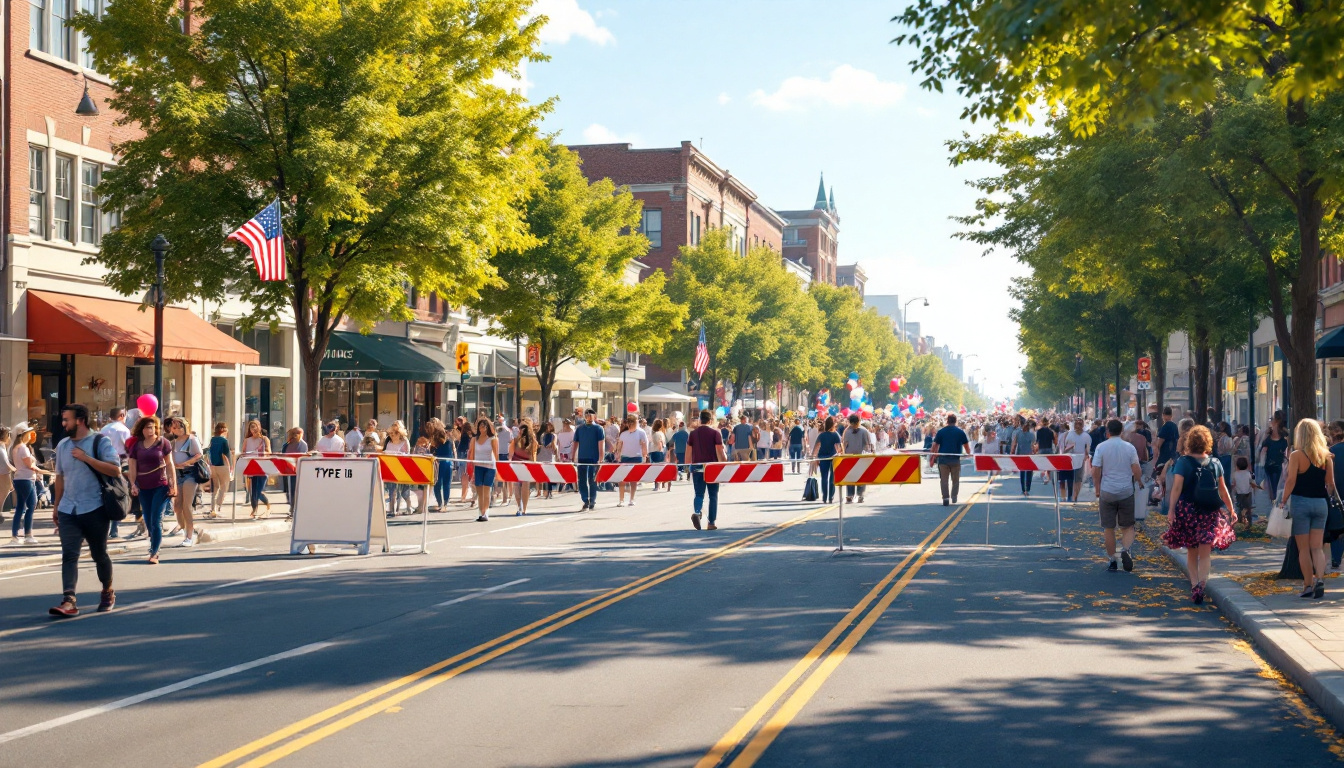
Special event traffic control looks like a variation on construction work and behaves like a different trade. Companies that treat it as a lane closure with a nicer atmosphere tend to find it busy, visible, and quietly unprofitable.
The design driver flips
On a construction job, the organising problem is protecting a work space from vehicular traffic. Traffic flows past; workers are separated from it.
At an event, the closure is usually complete and the public is inside it. The organising problems become pedestrian volume, access control at the perimeter, and emergency vehicle routing — with vehicular traffic managed at the edges rather than through the middle.
That inversion changes what the setup is for. Perimeter devices are keeping vehicles out rather than channelizing them through. Pedestrians are not being routed along a temporary walkway past a hazard; they are occupying the roadway by design. And the volumes are not comparable — a construction closure deals with a handful of pedestrians an hour, an event with thousands.
The MUTCD's Part 6 provisions still apply, and the ones that matter most are the least-used on construction work: road closure signing, pedestrian considerations, and accessibility. Accessibility in particular is treated as its own subject in the manual (Section 6C.03 of the 11th Edition Part 6) and is frequently the element a hastily assembled event plan handles worst. The manual's general principle that the needs and control of all road users, including persons with disabilities, are an essential part of temporary traffic control is not suspended because there is a festival on.
Many jurisdictions maintain their own special-event manuals or standard drawings, and those govern where they exist. As always, the authority having jurisdiction decides — requirements vary by state, county and city. Note too that the national manual is now in its 11th Edition, effective January 18, 2024 with Revision 1 effective March 5, 2026, and that it renumbered Part 6 — so an event plan citing 2009 Edition section numbers is citing a superseded edition even where the treatment itself is sound.
The pedestrian emphasis is not abstract. Of the 891 work zone fatalities FHWA records for 2022, 145 were pedestrians and bicyclists — a category that at an event is not incidental exposure but the entire population inside your perimeter. The design problem at an event is keeping vehicles away from a crowd, and it deserves the same seriousness as keeping a crowd away from vehicles.
The approval layer is wider
A construction closure typically needs the road owner's approval. An event closure usually needs several parties to agree.
The road-owning agency, as with any closure. The general framework is in right-of-way permits for traffic control work.
Police, who often have their own requirements around perimeter staffing, and who may require off-duty officer details at specific points — a real cost that belongs in the estimate.
Fire and EMS, whose concern is access. This is the condition that gets scrutinised hardest and the one most likely to change your layout. Emergency access lanes through or around the closed area, kept clear and passable, are typically non-negotiable, and "the vendors will move if needed" is not an acceptable answer.
Transit, where routes are affected. Detoured bus routes and relocated stops have their own lead times and their own signing.
A special events office, in larger cities, coordinating the whole thing on a published calendar with its own deadlines.
The practical consequence: lead times are driven by the slowest approver, and they are usually published well in advance because the event date is fixed. Event work rewards early submission more than almost any other kind, because there is no possibility of moving the date if the approval is late.
Setup and teardown are the job
This is the commercial heart of it.
On a construction job, setup is a fraction of the work. At an event, setup and teardown frequently are the work — a crew places a large perimeter over several hours, largely does nothing while the event runs, then removes it, often late at night.
Three consequences for pricing:
The billable window is not the closure window. Crews are working before the closure starts and after it ends. Quoting on the hours the street is closed under-recovers systematically.
The hours fall at premium times. Early morning setup and late-night teardown mean overtime, night differential, or both. Costing those at an average rate hides which events are actually profitable. The loaded-rate mechanics are in flagger labor cost per hour.
Standby is the middle of the day. Crews maintaining a perimeter for six hours are a real cost with little visible activity, and clients frequently push back on it precisely because nothing appears to be happening. It is easier to defend when the quote separates setup, maintenance and teardown as distinct line items rather than presenting one day rate.
Device volumes are also high relative to the revenue — a downtown perimeter can consume a large share of a yard for a weekend, which is inventory unavailable to your regular work. That opportunity cost is real and rarely priced. If devices are being tracked per deployment, at least it is visible; the mechanics are in tracking devices by job site.
Teardown is where things go wrong
Ask any company that does event work regularly and the failures cluster at the end.
Setup happens with fresh crews, in daylight, to a plan everyone reviewed. Teardown happens late, with tired crews, frequently in the dark, often while the public is still dispersing, and against pressure from the client to reopen the street.
That combination produces the two recurring failures: devices go missing, because counting is the first thing to slip when everyone wants to go home, and incidents happen, because reopening a street while pedestrians are still present is a genuinely hazardous transition.
Two disciplines are worth enforcing:
Count at teardown, on site, and reconcile against the placement count immediately. Not the next morning at the yard. The reconciliation is only actionable while people are still standing where the devices were.
Sequence the reopening deliberately. The order in which perimeter devices come out determines whether pedestrians and vehicles are ever sharing space unmanaged. It should be planned, not improvised at 1 a.m.
Night conditions bring their own requirements — illumination, retroreflectivity, visibility of workers — and the general set is covered in night work traffic control.
Recurring events are a different business
An annual event you have run for six years is a materially better proposition than a one-off, for reasons worth being deliberate about.
The layout is known, the approvals follow a known pattern, the device count is known, and the crew has done it before. Companies that keep the previous year's plan, device count, actual hours and post-event notes on the job record can quote the next one accurately in an hour, and can improve the layout each year rather than rediscovering the same problems.
Companies that do not keep those records re-estimate from scratch annually, usually low, and repeat last year's mistakes. The difference is entirely administrative and compounds every year.
Worth capturing after each event, while it is fresh: actual setup and teardown hours, device counts placed and recovered, anything the agencies asked to change, anything that went wrong at the perimeter, and what the client complained about. That is a fifteen-minute debrief that makes next year's quote defensible and next year's job easier.
The short version
Event work is not a lane closure with a crowd. The design driver is pedestrian management rather than vehicular channelization, the approval layer is wider and less forgiving of late submission, the profitability lives entirely in setup and teardown hours, and teardown is where the losses and the risk concentrate.
Priced with those things visible as separate lines, it is good work — predictable, repeatable, and generally paid by clients who plan a year ahead. Priced as a day rate on a closed street, it is a way to be busy.
If your event jobs currently get quoted from memory of last year, bring one to a walkthrough — Traffic OS keeps the plan, device counts, actual hours and permit conditions on a job record you can copy forward, priced in flat monthly tiers rather than per user. The estimating framework that sits underneath is in bidding traffic control jobs.
Frequently asked questions
How is special event traffic control different from construction?+
The primary design driver flips. On a construction job you are protecting a work space from traffic; at an event you are usually managing large pedestrian volumes and a full closure, with the public inside the closed area rather than routed past it. Setup and teardown windows are also far tighter and non-negotiable.
Who approves special event closures?+
Typically more parties than a construction closure — the road-owning agency plus police, fire and EMS, often transit, and sometimes a separate special-events office. Emergency access through and around the closure is usually the condition that gets scrutinised hardest.
What makes event work profitable or not?+
Setup and teardown labor, which are the bulk of the hours and often fall at premium times. An event priced on the hours the street is closed rather than the hours your crew is working will lose money reliably.
Does the MUTCD cover events?+
Part 6 covers temporary traffic control generally, and its provisions for road closures, pedestrian considerations and accessibility apply. Many jurisdictions also have their own special-event manuals or standard drawings, and those govern where they exist.
What is the most common operational failure?+
Teardown. Crews and attention are committed to setup; teardown happens late, tired, in the dark, often with the public still present, and it is where devices go missing and where the incidents happen.