September 23, 2026 · The Key Bot
Noise Ordinances and Night Work: The Permit Nobody Mentions Until the Complaint
Agencies push lane closures to night hours to protect traffic, and local noise rules push the other way. Here is how noise requirements for night roadwork generally work, where they come from, what a variance process usually asks for, and what a traffic control company controls.
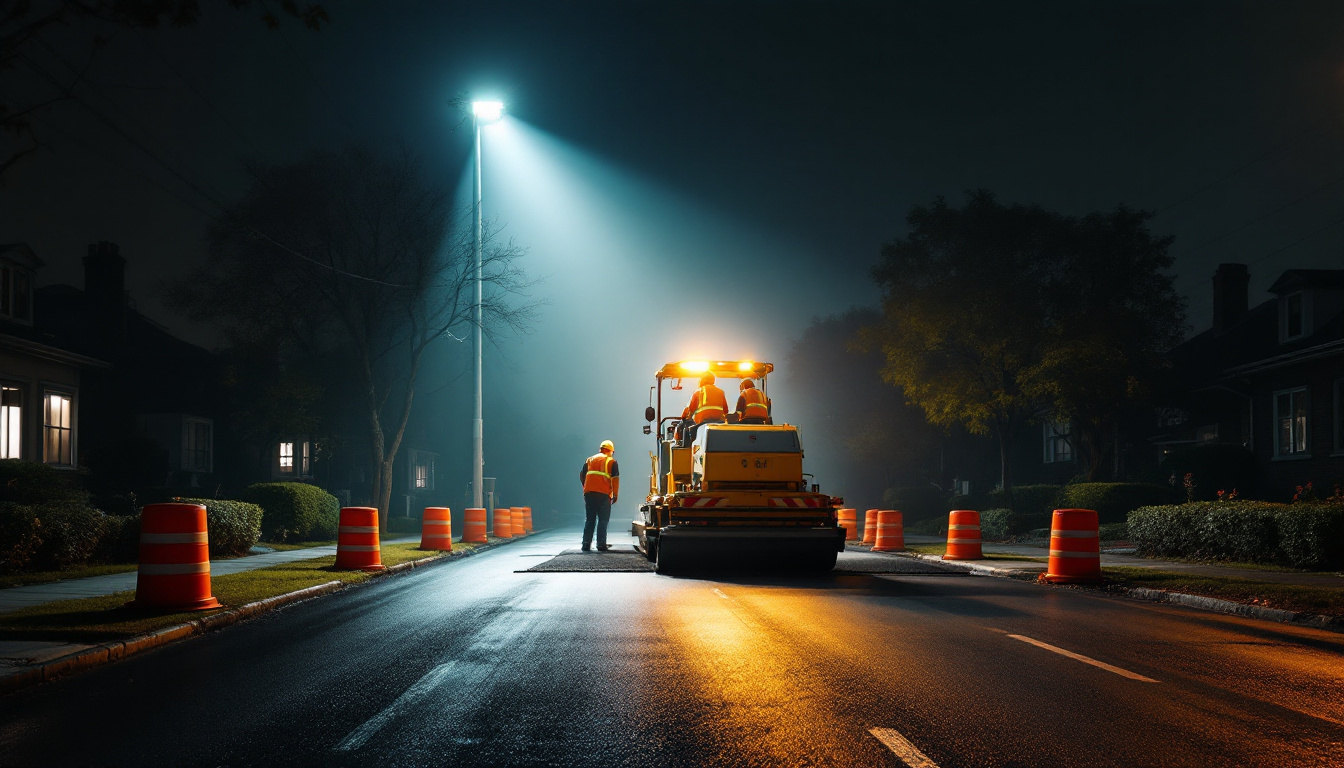
Transportation agencies increasingly push lane closures into night hours. Traffic volumes are lower, delays are shorter, and the closure windows written into many permits and contracts make daytime closures on busy roads difficult or impossible. Our post on night work traffic control covers how the work itself changes after dark.
But the same move that protects traffic puts the work next to people who are trying to sleep. Local noise rules frequently restrict construction noise at night, and the permit that allows a lane closure is usually not the permit that allows the noise. The first time many traffic control companies learn about a noise ordinance is when someone calls the police at 1 a.m.
This post explains how noise requirements for night roadwork generally work, and what to ask before the first night shift. It describes the process in general terms only. Noise rules are set locally and vary widely; verify requirements with every jurisdiction your work sits in and with the agency that issued your permit.
Where noise requirements come from
There are typically two layers.
Project-level requirements on federal-aid highway work
For certain federal-aid highway projects, the federal noise regulation addresses construction noise at the project development stage. Under 23 CFR 772.19, highway agencies are to identify land uses or activities that may be affected by construction noise, determine the measures needed in the plans and specifications to minimize or eliminate adverse construction noise impacts to the community, and incorporate the needed abatement measures into the plans and specifications.
In practice, that means a project may already carry noise provisions in its specifications: restricted hours for certain operations, equipment requirements, or monitoring. If you are working on such a project, those provisions are part of your contract whether or not anyone mentions them at the pre-construction meeting.
FHWA's Highway Construction Noise Handbook is the agency's reference on measuring, predicting and mitigating highway construction noise, developed with the Volpe Center. It is written for agencies, but it is useful background for any contractor working nights.
Local noise ordinances
Most cities and many counties have their own noise ordinances. They commonly define quiet hours, set limits by zoning district, and provide some route to an exemption — for public works, emergencies, or work that a permit requires to happen at night. The details are local: which hours, which limits, who grants exemptions, and whether state highway work is covered at all.
The practical problem is that a single project can cross several jurisdictions, each with its own rules, while the lane closure permit comes from one agency.
What makes noise at night
A traffic control crew is rarely the loudest thing on a night paving job, but it makes noise at exactly the wrong times — setting up before the main work starts and tearing down after it ends.
The FHWA handbook's construction equipment noise table gives default maximum levels at 50 feet used in its noise model, including 81 dBA for a generator, 85 dBA for pneumatic tools, 89 dBA for a jackhammer and 90 dBA for a concrete saw, and measured levels of 76 dBA for a dump truck and 75 dBA for a pickup. The sources a traffic control crew brings are mostly trucks, generators and light towers, backup alarms, and the impact noise of unloading devices, dropping sandbags and setting barricades.
How a variance process usually works
Where a local ordinance requires one, a night work noise variance or exemption process typically asks for some combination of:
- The location and limits of the work.
- The dates and hours, including setup and removal time — not just the main operation.
- Why night work is necessary, often the permitting agency's closure window.
- The equipment to be used.
- Mitigation measures — equipment placement, shielding, limits on the loudest operations, notification of residents.
- A contact available during the work for complaints.
Approval may come with conditions: restricted hours for particular activities, a requirement to notify residents in advance, or a limit on the number of nights.
Questions to ask before the first night shift
- Does the project specification contain noise provisions? Where?
- Which jurisdictions does the work area fall in, and what are their quiet hours?
- Does a variance or exemption exist for this project, and who holds it?
- Does it cover setup and removal, and does it cover the traffic control subcontractor?
- What conditions come with it — hours, equipment, notifications, contact person?
- Who is the contact when a complaint comes in, and what is the procedure?
Get the answers in writing and keep them with the job. Our post on lane closure restriction windows and curfews covers the traffic side of the same scheduling problem, and multi-jurisdiction permit tracking covers keeping several agencies' conditions straight.
What a traffic control company controls
Even when the variance belongs to someone else, the crew's behavior shapes whether complaints happen.
Stage the noisy parts. Unload and stage devices away from homes where the plan allows, rather than dropping them at the curb outside a bedroom window.
Aim and place lights carefully. Light towers bring generator noise and glare. Our guide to work zone lighting and light towers covers placement.
Keep engines off when idle. Where it is safe and consistent with the plan, idling trucks are avoidable noise.
Never trade safety for quiet. Backup alarms and similar safeguards protect workers, and their requirements come from safety rules, vehicle requirements and contracts. If they are the problem, raise it with the agency and your safety program — alternatives exist, but disabling them is not one.
Record the timeline. Setup start, closure installed, closure removed, crew off site. When a complaint alleges work outside the permitted hours, the answer is the record.
Keeping the record
The signed daily ticket is the natural place for night work times. In Traffic OS, crews record start and stop times on the ticket, the GPS time clock captures when each person clocked in and out, and the ticket is signed on site with the time and GPS position recorded. That gives you a timeline to set against any complaint or variance condition. The features page lists what is included, and you can book a demo to see a ticket.
Noise rules are local, and they rarely appear in the traffic control plan. Ask about them before the first night, and keep the record that proves you worked inside them.
Frequently asked questions
Do noise ordinances apply to road work at night?+
Often they do, but it depends entirely on the jurisdiction. Many cities and counties restrict construction noise during nighttime hours and provide exemptions or variances for public works, emergencies or work required by a permit. Some state highway work is treated differently from local street work. Check the ordinance of every jurisdiction the work sits in, and ask the permitting agency how the two interact.
Who gets the noise variance — us or the prime?+
Usually whoever the contract or permit assigns it to, which is often the prime contractor or the agency sponsoring the project. A traffic control subcontractor is typically covered by the project's variance rather than holding its own, but confirm that in writing, because your crew may be the first on site and the last to leave.
What noise does a traffic control crew actually make?+
Truck engines, backup alarms, dropping devices, generators and light towers, and the impact of setting barricades and sandbags. It is less than a milling or paving operation, but it happens at the edges of the shift — often the loudest part of the night for nearby residents.
Can backup alarms be turned off to reduce noise?+
Not as a noise fix. Backup alarms and other reverse-motion safeguards exist to protect workers, and safety requirements for them come from OSHA rules, vehicle requirements and contracts. If noise from alarms is a problem, look at alternatives the agency and your safety program accept, such as broadband alarms or spotters — never at disabling them.
What happens if we get a noise complaint?+
Record it, tell the prime and the agency contact, and check whether the work is inside the approved hours and variance conditions. Complaints tend to affect the next permit more than the current one, so how they are handled matters.