August 8, 2026 · The Key Bot
Work Zone Lighting and Light Towers: Getting Night Illumination Right
Night work needs light, and badly aimed light creates glare that makes the work zone more dangerous than darkness. Here is how illumination requirements, tower placement, and glare control actually work.
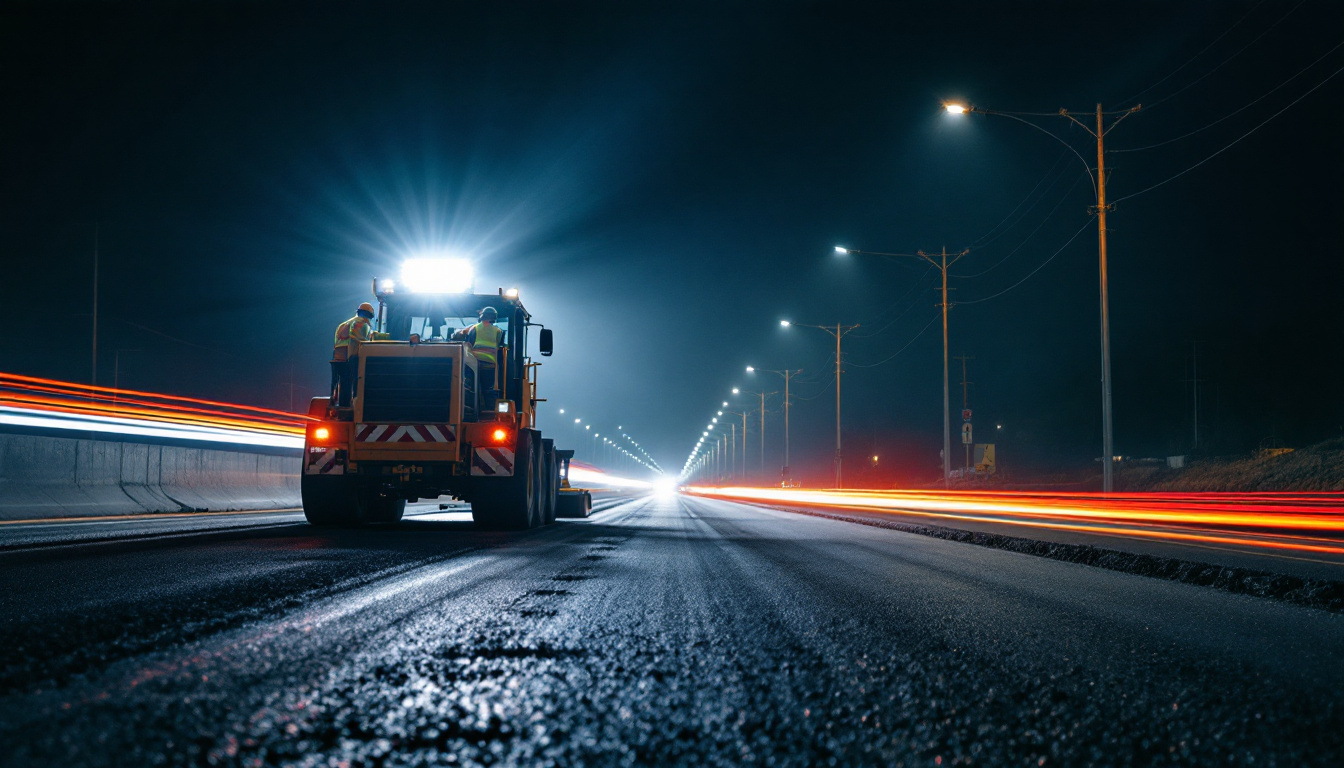
Night work exists because closing a lane at 2 p.m. is unacceptable and closing it at 2 a.m. is merely inconvenient. The trade is that you have moved the work into conditions where everything is harder to see — for your crew and for the drivers passing them.
Lighting is the intervention that addresses that, and it is one of the few pieces of work-zone equipment that can make things actively worse when done badly. A poorly aimed light tower does not fail neutrally; it produces glare that degrades the vision of exactly the drivers you most need to see your taper.
Two different lighting problems
The confusion in most conversations about work zone lighting is that two distinct requirements get treated as one.
Lighting the work area, for workers. This is an occupational-safety requirement about being able to see the task. OSHA's construction standard addresses it directly: 29 CFR 1926.56 sets minimum illumination intensities in foot-candles for construction areas, with different minimums depending on the area — general construction areas, plants and shops, and areas such as tunnels and shafts each carry their own figure. Read the table for the area type you are working in rather than assuming a single number applies.
Lighting relative to the traveling public. This is a traffic-engineering matter, and it is where glare lives. It is governed by the project specification and the agency having jurisdiction, layered on the national temporary traffic control provisions in MUTCD Part 6.
Meeting the first requirement while ignoring the second is the standard failure mode: the work area is beautifully lit, and every driver approaching from the south is looking into a bank of metal halide.
Why glare is the priority problem
A driver approaching a night work zone is performing a demanding visual task — reading signs, finding the taper, tracking a shifted alignment, judging closure of a lane, all at speed, with degraded contrast. Introduce a bright source in the field of view and two things happen: pupils constrict, reducing sensitivity to everything dimmer, and scattered light inside the eye washes out contrast across the whole scene.
The consequence is that the driver's ability to see your devices, your markings, and your crew drops at precisely the moment it matters. The context is not hypothetical: NHTSA's Fatality Analysis Reporting System recorded 850 work zone fatalities in 2024 across 763 fatal crashes, and night work carries a well-recognized share of the risk.
The controls are unglamorous:
Aim away from oncoming traffic, in both directions. Every approach, not the obvious one.
Aim downward and use shielding. Light directed at the work surface rather than across it does the job with far less spill.
Check from the driver's seat. Drive every approach at posted speed after the towers are up. This is a five-minute check that catches what no amount of yard planning will, and it belongs in the same category as the drive-through verification described in night work traffic control.
Avoid dark transitions. Abrupt changes from brightly lit to unlit are their own hazard, because eyes adapt slowly. Uniformity across the zone matters as much as peak intensity in the middle of it.
Placement, which is a plan question
Where the towers go is not a convenience decision, and it should not be made by whoever unhitches first.
A light tower is a substantial object with a mast, outriggers, and a trailer. Placed in or near the traveled way it is a hazard, and it should be outside the clear area or protected — the same logic that governs other equipment near live traffic, discussed in positive protection in work zones.
Practical placement considerations: keep towers out of the taper and the buffer space, where a vehicle that leaves the roadway will arrive; keep masts clear of overhead lines, which is a lethal hazard and one that the mast makes easy to forget about; site them so that raising and lowering can be done without anyone standing in a live lane; and think about where the crew will actually be working, since a tower lighting the wrong side of the operation produces silhouettes and shadows rather than visibility.
Shadowing is worth its own note. A tower on one side of a machine puts the working face of that machine in shadow. Two towers at an angle to each other resolve this, and it is the most common reason a site with adequate total illumination still has crews working in the dark.
Maintenance, and why output quietly decays
Light towers are engine-driven equipment that spends its life outdoors, and their failure mode is gradual dimming that nobody perceives because it happens over months.
Lenses. Road grime on a lens is the single largest recoverable output loss, and cleaning is trivial and routinely skipped.
Lamps. Output degrades with hours well before failure. Tracking run hours per tower makes lamp replacement a scheduled item rather than a discovery.
Mast and outriggers. These are the safety-critical mechanisms. A mast that will not lower is a problem at 5 a.m. with a lane about to open.
Fuel and run hours. A tower that runs out at 3 a.m. has just created darkness in the middle of an operation, which is worse than never having been there because everyone has adapted around its presence.
Because towers are high-value assets with service histories, they belong in individual records rather than category counts — the same treatment argued for in equipment fleet replacement planning and applied to arrow boards and message signs in arrow boards and message signs explained. Run hours, service dates, lamp changes, and fuel consumption per tower are what turn maintenance from reactive to scheduled.
A short night-lighting checklist
Illumination adequate for the task per the applicable OSHA minimum for the area type. Towers aimed away from all traffic approaches and shielded where spill is unavoidable. Every approach driven at speed after setup, in the dark, before work begins. No abrupt lit-to-unlit transitions along the corridor. Towers outside the clear area or protected. Masts clear of overhead lines. Angled placement to eliminate shadowing on the working face. Fuel checked for the full shift plus margin. Lenses cleaned.
Nine items, most of them free. The one that catches the most problems is the drive-through, and it is the one most often skipped because everyone is already behind.
If you want tower hours, service history, and deployment tracked as asset records rather than remembered, that is how Traffic OS models equipment — and a demo can be run against your own yard.
Frequently asked questions
Is there a minimum lighting level for construction work areas?+
Yes. OSHA's construction standard sets minimum illumination intensities in foot-candles for construction areas, with different minimums by area type. That is a worker-safety floor for the work area itself; how a work zone must be lit relative to passing traffic is governed by the project specification and the agency having jurisdiction.
What is the biggest lighting mistake on night work?+
Aiming towers so that light reaches oncoming drivers. Glare disables approaching motorists at exactly the moment they need to read a taper, and it is created by crews trying to light their own work well. Aim away from traffic, shield where necessary, and check the result from the driver's seat.
How many light towers does a job need?+
Enough to light the work area to the required level without creating dark transitions, which is more about placement and overlap than about count. Two well-placed towers frequently beat four badly placed ones, because uniformity matters as much as intensity.
Do light towers need to be behind positive protection?+
Treat a tower like any other object in or near the traveled way: it should be outside the clear area or protected. Placement is a plan question, not a convenience question, and it should be resolved with the agency rather than decided by where the generator is easiest to park.
What maintenance actually matters on a light tower?+
Fuel and hour tracking, lens cleaning, mast and outrigger function, and tire condition. Lens dirt alone can cost a substantial share of output, and it degrades gradually enough that nobody notices until a tower is visibly worse than its neighbor.