August 29, 2026 · The Key Bot
Traffic Control at Incident and Emergency Scenes: What MUTCD Chapter 6O Requires
Unplanned scenes have their own chapter in the manual — three duration classes, an Incident Command System requirement, and permission to use whatever devices are on the truck. What that means for a contractor who gets the call.
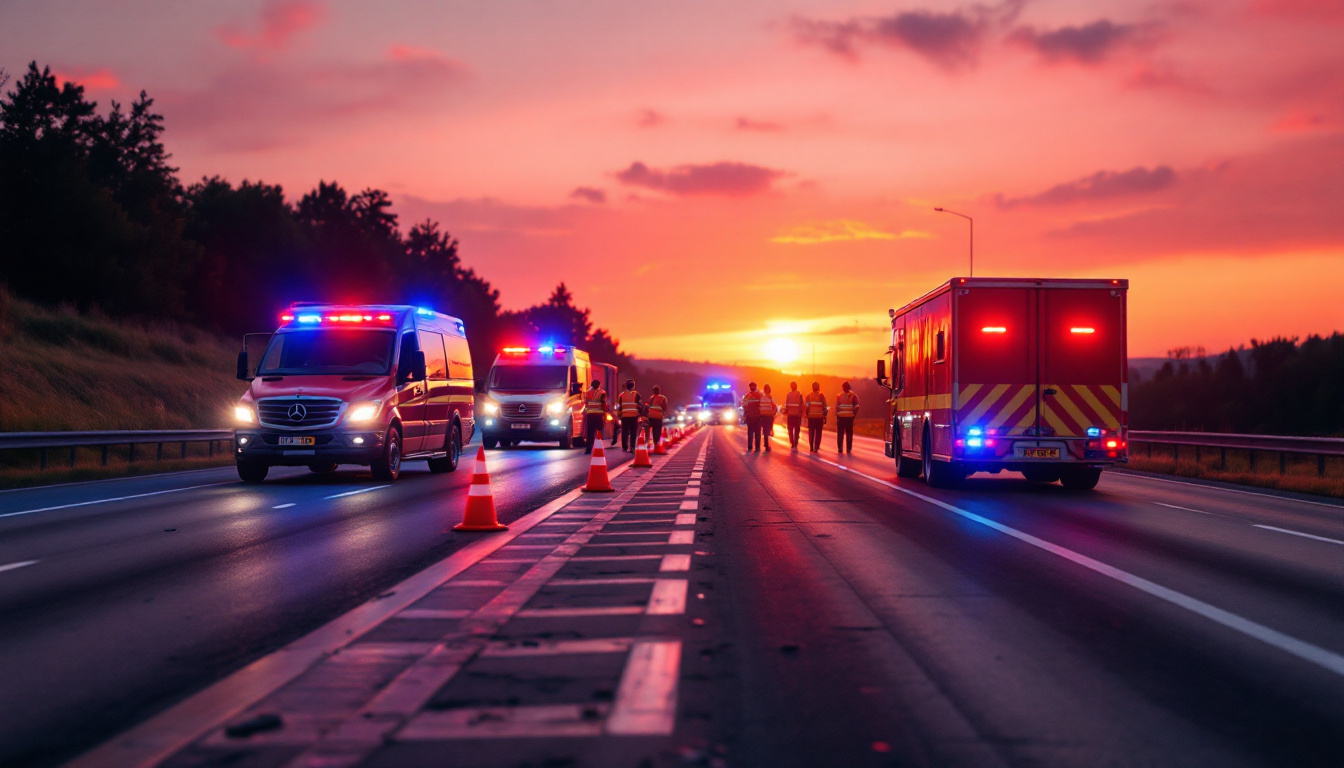
Most traffic control planning assumes you knew about the job in advance. Incident work does not. A contractor gets a call — a crash, a spill, a washout, a pole down — and arrives at a scene that already has vehicles, responders, and a queue, with no plan and no permit.
The MUTCD has a chapter for exactly this, and it is more permissive and more structured than people expect. Knowing it before the call is the difference between arriving useful and arriving in the way.
Standing caveat: this describes how the national framework generally works. Emergency and incident authority varies by state and locality, and the official having jurisdiction at the scene governs. Verify your own jurisdictions' provisions in advance.
Where it lives, and what a TIMA is
Chapter 6O of MUTCD Part 6 covers control of traffic through traffic incident management areas. Two definitions frame it.
A traffic incident is an emergency road user occurrence, a natural disaster, or other unplanned event that affects or impedes the normal flow of traffic.
A traffic incident management area is an area of a highway where temporary traffic controls are installed, as authorised by a public authority or the official having jurisdiction of the roadway, in response to a road user incident, natural disaster, hazardous material spill, or other unplanned incident. It is a type of TTC zone, and it extends from the first warning device — a sign, light, or cone — to the last device, or to the point where vehicles return to their original lane alignment clear of the incident.
That extent definition matters more than it looks. The TIMA is not "the crash." It is everything from the first cone to the point traffic recovers, which on a busy highway with a long queue is a considerably larger area than the responders standing near the wreck tend to picture.
The three duration classes
The manual divides incidents into three classes by expected duration, each with different control characteristics and needs: major, expected to last more than 2 hours; intermediate, 30 minutes to 2 hours; and minor, under 30 minutes.
Responders arriving at an incident are expected to estimate the magnitude, the expected duration, and the expected queue length, and then set up controls appropriate to those estimates.
This is the single most useful thing to carry into an incident call, because it converts an ambiguous situation into a decision. A minor incident does not warrant a full setup that will take longer to install and remove than the incident will last — that is exposure without benefit. A major incident that was treated as minor because the first responder was optimistic produces a two-hour closure held together by four cones and a truck with its hazards on.
The estimate is also the thing most often wrong in the same direction. Clearance takes longer than the first estimate, and the manual's guidance anticipates this by asking that planning and training incorporate estimated clearance durations in the initial incident estimate, with early notification when a probable major incident could generate prolonged closures, so that the scene can transition from emergency control to a compliant TTC zone as quickly as possible.
You may use what is on the truck
The provision contractors most need to know: the manual includes an Option stating that for traffic incidents, particularly those of an emergency nature, TTC devices on hand may be used for the initial response as long as they do not themselves create unnecessary additional hazards.
That is a genuine and sensible relaxation. Nobody is expected to withhold protection because the correct sign is in the yard. What it is not is a standing exemption. It covers the initial response, and the manual's surrounding guidance is oriented toward transitioning to a compliant zone as the incident stabilises. A scene still running on improvised devices four hours later is no longer in an initial response.
The other Option worth knowing: warning and guide signs used for incident management may have a black legend and border on a fluorescent pink background. Pink is reserved to incident management, which is precisely what makes it valuable — it tells approaching drivers this is unplanned, and it distinguishes your scene from the planned roadwork they passed a mile earlier. If your company takes incident calls, carrying a small set of pink-backed incident signs is a low-cost, high-signal investment.
You are arriving into a command structure
The chapter opens by noting that the National Incident Management System requires the use of the Incident Command System at traffic incident management scenes.
For a contractor, the practical translation is short: someone is in charge, and it is probably not you. Before placing a device, find the incident commander and establish what has been requested, what the clearance plan is, and where your setup fits. Deploying a taper that conflicts with the emergency vehicle positioning that was established before you arrived is worse than deploying nothing.
The manual's guidance on emergency vehicle positioning is explicit that vehicles should be positioned to protect both responders and passing road users while minimising disruption, and that later-arriving vehicles should not interfere with the established traffic flow. Your trucks are later-arriving vehicles.
What actually protects people at these scenes
Two points from the guidance worth carrying.
The queue is the hazard. The manual directs attention to the upstream end of the traffic queue so that approaching road users are warned, and asks that TTC include proper diversions, tapered lane closures, and upstream warning devices to alert traffic approaching the queue and encourage early diversion. Secondary crashes into the back of an incident queue are the risk being managed, and the back of the queue is frequently a long way from the scene and moving.
Everyone on scene needs to be visible. The guidance asks that all on-scene responders and news media personnel be constantly aware of their visibility to oncoming traffic and wear high-visibility apparel — which is a reminder that incident scenes accumulate people who did not arrive with a safety briefing. Our piece on high-visibility apparel classes covers what the classes mean.
The underlying risk is not hypothetical. The Work Zone Safety Information Clearinghouse records 850 work zone fatalities across 763 fatal crashes in 2024, following 905 fatalities across 824 fatal crashes in 2023, and the same exposure applies at an incident scene with less warning and less preparation.
Getting the operational side right
Incident calls stress the parts of a business that planned work does not.
Dispatch after hours. The call arrives at 2 a.m., and whether anyone answers, and how quickly a crew and the right devices reach the scene, is an operations problem rather than a traffic control one — it is the subject of emergency callout dispatch.
Documentation without a plan. There is no plan sheet to work from and no permit to reference, which makes the field record the only record. Photographs, times, who directed what, and the device layout as installed are what you will need weeks later — for billing, and occasionally for more than billing. This is where a GPS time clock and time-stamped field records earn their keep, because reconstructing an unplanned overnight call from memory is not reconstruction.
Billing an unquoted job. Incident work is frequently performed before anyone agrees a price, which makes the rate basis and the field record the whole of your commercial position. If you take incident calls regularly, it belongs in your master service agreement and rate sheet with callout, standby, and after-hours rates already agreed — not negotiated at 3 a.m. or, worse, after the fact.
Transition to a planned zone. A major incident that turns into a multi-day repair becomes ordinary work under an ordinary plan. Knowing when that handover happens, and who is responsible for the compliant setup at that point, avoids the scenario where the emergency setup simply persists because nobody declared the emergency over.
The short version
Incident work has its own chapter, its own duration classes, its own sign colour, and explicit permission to improvise on the initial response. What it does not have is an exemption from the rest of the manual once the scene stabilises, or from the command structure you are arriving into. Read Chapter 6O once before the phone rings, decide which duration class you are looking at when you arrive, and get your devices into a shape that warns the back of the queue — because that is where the next crash comes from.
Frequently asked questions
What is a traffic incident management area?+
A TIMA is an area of highway where temporary traffic controls are installed in response to an incident, natural disaster, hazardous material spill, or other unplanned event, as authorised by the public authority or official having jurisdiction. It is a type of TTC zone and extends from the first warning device to the last device, or to where vehicles return to their original lane alignment clear of the incident.
How does the MUTCD classify incidents?+
By expected duration, into three classes with different control needs: major, expected to last more than 2 hours; intermediate, 30 minutes to 2 hours; and minor, under 30 minutes. Responders are expected to estimate the class on arrival and set up controls appropriate to that estimate.
Can we use whatever devices are on the truck at an incident?+
The MUTCD includes an Option permitting devices on hand to be used for the initial response at traffic incidents, particularly emergency ones, as long as they do not themselves create unnecessary additional hazards. That is permission for the initial response, not a standing exemption from the rest of the manual.
What are the pink incident signs?+
The manual includes an Option allowing warning and guide signs used for incident management situations to have a black legend and border on a fluorescent pink background. Pink is specific to incident management, which is what makes it useful — drivers and responders can distinguish an unplanned scene from planned roadwork.
Does the Incident Command System apply to us?+
The manual notes that the National Incident Management System requires the use of the Incident Command System at traffic incident management scenes. If you are dispatched to an active incident, you are arriving into someone else's command structure and need to know who is running it before you set anything out.
Is emergency work exempt from permits?+
Frequently there are emergency provisions, but they vary by jurisdiction and usually carry notification requirements rather than removing obligations entirely. Find out what your jurisdictions permit before you need it, because the moment you need the answer is the moment nobody has time to look it up.