Blog · page 7 of 10
Operations playbooks for traffic control crews
Field notes, software comparisons and deep dives for traffic control, barricade rental and lane-closure companies, with every source linked.

Traffic control plans
Submitting a Traffic Control Plan for Approval: The Process, Start to Finish
Approval timelines are the hidden schedule risk on permit work. Here is what a submittal package generally contains, who reviews it, how long revisions take, and the habits that keep a start date from slipping.
Aug 19, 2026 · 6 min read

Choosing software
Taking Card Payments for Barricade Rentals: What to Set Up and What It Costs
Card acceptance shortens collection on the smaller commercial jobs that otherwise sit in receivables — but rentals bill repeatedly, and the setup that works for a one-time sale does not work for a device on site for six weeks.
Aug 19, 2026 · 5 min read

Running the business
Traffic Control Supervisor Certification, Explained
Flagger cards are the credential everyone knows about. TCS is the one that decides whether your company can bid certain work — and the one most likely to expire quietly while the holder is still on the payroll.
Aug 19, 2026 · 6 min read

Compliance and work-zone safety
The Work Zone Safety and Mobility Rule (23 CFR 630 Subpart J), Explained
The federal rule behind every TMP, significant-project designation, and transportation operations component — what it actually requires, which projects it captures, and what it means for a traffic control subcontractor.
Aug 19, 2026 · 11 min read

Running the business
Adverse Weather Traffic Control Operations: Rain, Wind, Heat, and Ice
Weather changes device behavior, marking performance, driver capability, and crew endurance all at once. Here is how to plan setups, staffing, and stand-down decisions around it.
Aug 8, 2026 · 5 min read

Running the business
The Daily Dispatch Routine for a Traffic Control Company
What a working dispatch day actually looks like — the afternoon-before build, the morning release, the midday reality check, and the end-of-day close — plus the three habits that separate companies that dispatch well from those that firefight.
Aug 8, 2026 · 6 min read

Running the business
Equipment Fleet Replacement Planning for Traffic Control Companies
Most traffic control companies replace devices when they break, which means replacement spending is unpredictable and always badly timed. Here is how to build a replacement cycle you can budget.
Aug 8, 2026 · 5 min read

Compliance and work-zone safety
Internal Traffic Control Plans: Controlling the Traffic Inside Your Own Work Zone
A traffic control plan protects the public from the work zone. An internal traffic control plan protects workers from the equipment inside it — the hazard that kills more road workers than passing motorists on many projects.
Aug 8, 2026 · 11 min read

Compliance and work-zone safety
MASH Compliance for Work Zone Devices: What It Means for Your Inventory
MASH changed which crashworthy devices can be installed on federal-aid projects, and the manufacture date on your barricades and sign supports now matters. Here is how the agreement works and how to audit an existing fleet.
Aug 8, 2026 · 11 min read

Running the business
Measuring Safety Performance in Your Own Traffic Control Company
National work zone statistics describe a country, not your operation. Which metrics actually tell you whether your company is getting safer, how to collect them without a research budget, and how to present them to an agency or an underwriter.
Aug 8, 2026 · 11 min read

Traffic control plans
Moving Operations and Rolling Lane Closures: How They Work
Rolling roadblocks and continuously moving work zones are among the highest-skill operations a traffic control company performs. What makes them different, where the risk concentrates, and what has to be agreed before the crew rolls.
Aug 8, 2026 · 5 min read

Permits and DOT
Tracking Permits Across Multiple Jurisdictions Without Losing One
Traffic control companies routinely hold permits from a dozen different agencies at once, each with its own portal, lead time, and expiry. Here is how to structure the tracking so an expired permit never becomes a stop-work order.
Aug 8, 2026 · 5 min read

Traffic control plans
Traffic Control Plans for Phased Construction: Managing the Handoffs
On a phased project the dangerous moments are not the phases — they are the transitions between them. Here is how phased TCP packages are structured, what goes wrong at handoffs, and how contractors stay ahead of the sequence.
Aug 8, 2026 · 11 min read

Equipment and yards
Portable Traffic Signals in Work Zones: When They Beat Flaggers
Temporary portable signals can control one-lane two-way operations without putting a person in the road. Where they fit, what they cost to run properly, and the failure modes that catch companies deploying them for the first time.
Aug 8, 2026 · 5 min read

Running the business
Purchase Orders and Vendor Management for Traffic Control Companies
Unmanaged buying is one of the quietest margin leaks in a growing traffic control company. What a purchase order process should actually control, how to manage device and rental vendors, and where the savings really are.
Aug 8, 2026 · 5 min read

Choosing software
Quoting Traffic Control Jobs Faster Without Quoting Them Worse
How traffic control companies cut quote turnaround from days to hours using a device catalog, reusable job templates, and a clear escalation rule — and which jobs should still take a day to price.
Aug 8, 2026 · 6 min read
Compliance and work-zone safety
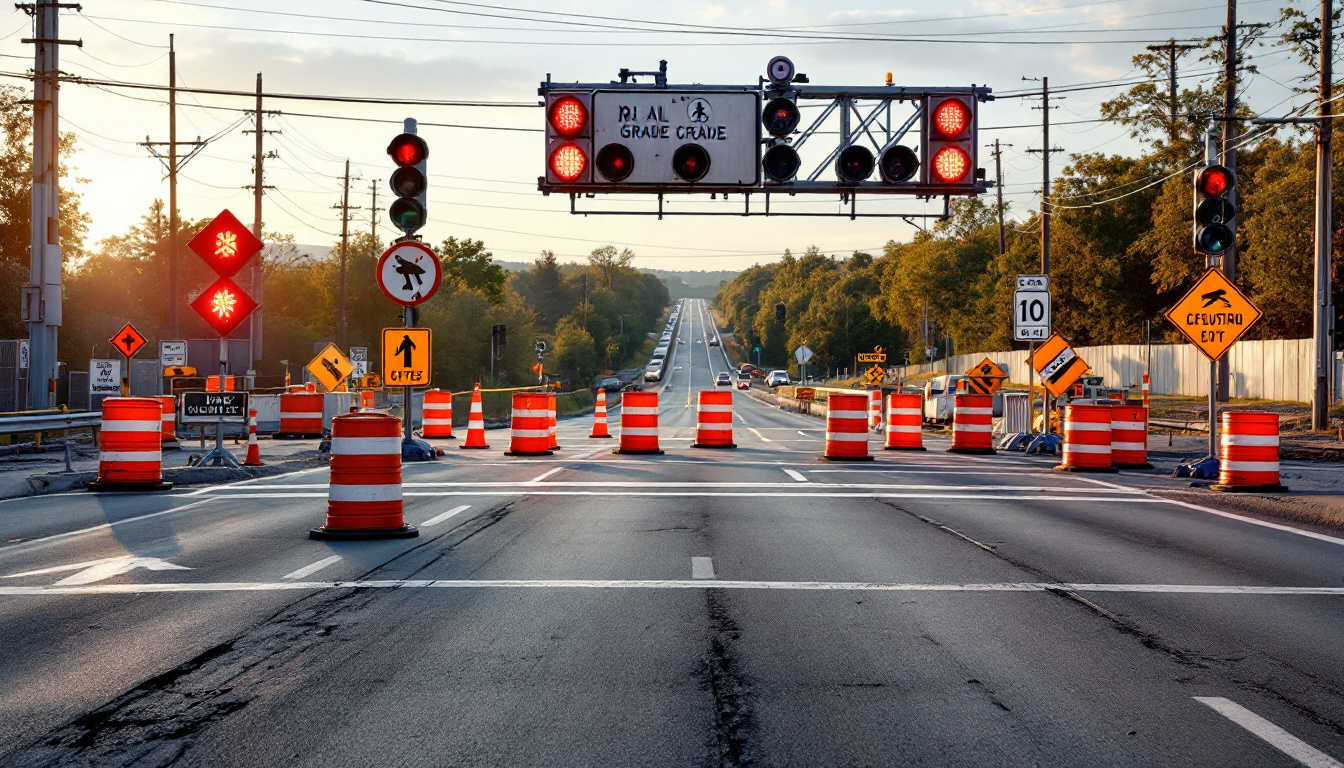
Work Zones at Highway-Rail Crossings: What Changes and Who You Have to Call
A lane closure near a grade crossing introduces a second authority, a queue you must never create, and coordination lead times most contractors underestimate. Here is what changes.
Aug 8, 2026 · 5 min read

Running the business
Retainage and Cash Flow on Traffic Control Contracts
Traffic control companies carry labor and equipment costs weekly and get paid on construction timelines. Retainage makes the gap worse. Here is how the cash cycle actually works and where it can be shortened.
Aug 8, 2026 · 5 min read

Choosing software
Rolling Out New Software to Traffic Control Crews Without Losing the Season
Most traffic control software failures are rollout failures, not product failures. Here is a sequencing approach that gets field adoption without betting a season on it.
Aug 8, 2026 · 6 min read

Running the business
Scaling a Traffic Control Company: What Breaks at Each Stage
The operational failure points that show up as a traffic control or barricade rental company grows — from one crew to five, five to fifteen, and fifteen to fifty — and what actually has to change at each threshold.
Aug 8, 2026 · 11 min read

Traffic control plans
Short-Duration and Mobile Work Zones Explained
The federal framework treats a three-week closure and a twenty-minute operation as different problems. Here is how work duration categories are structured, why fewer devices can be the safer choice, and what that means for pricing and crew instruction.
Aug 8, 2026 · 5 min read

Equipment and yards
Sign Retroreflectivity and Device Condition: When a Device Stops Counting
A faded sign and a scuffed drum are not cosmetic problems — a device that no longer performs is functionally not there. How condition standards work, how to run an inspection that catches decline, and how to make retirement a budget line rather than a surprise.
Aug 8, 2026 · 5 min read

Permits and DOT
How State DOT Work Zone Requirements Vary — And How to Work Across Them
Why two states can both be fully compliant with the federal framework and still demand different devices, plans, certifications, and paperwork — and how a traffic control contractor should organize to work in more than one of them.
Aug 8, 2026 · 12 min read

Running the business
Tailgate Safety Meetings That Crews Actually Use
Most toolbox talks are a signature exercise. What a five-minute pre-task briefing should contain for a traffic control crew, why it should be site-specific rather than topical, and how to keep the record without turning it into paperwork.
Aug 8, 2026 · 5 min read